

The mannequin is a silent, yet profound, cultural barometer. Its shifting form—from the curvaceous figures of the Victorian era to the minimalist abstractions of today—offers a direct reflection of evolving societal aesthetics, technological progress, and commercial strategies. This historical journey is not merely about the classic Female mannequin or Male mannequin; it provides essential context for understanding the specialized development of sports mannequins, the rise of the athletic mannequin, and even the design philosophy behind contemporary Child mannequins. To study the mannequin's past is to understand the visual language of consumer desire.
From Opulence to Abstraction: The Changing Silhouette of Desire
The mannequin's primary role has always been to embody the contemporary ideal, making fashion tangible and aspirational.
The Era of Opulent Curves (Victorian to Mid-20th Century): Early mannequins mirrored the prosperous, corseted ideals of their time, featuring full, rounded forms. As manufacturing advanced with materials like fiberglass, the mid-20th century saw the dawn of the "supermodel mannequin"—sleeker, taller forms modeled on celebrities like Twiggy. This established the mannequin as an aspirational icon, a trend that continues in today's idealized Female mannequin and Male mannequin lines.
The Shift to Minimalism and Abstraction (Late 20th Century - Present): The rise of fast fashion and a global minimalist aesthetic catalyzed a dramatic shift. To keep the focus squarely on high-turnover, design-led apparel, mannequins themselves became simpler. Abstract, often featureless forms—whether a sleek black female mannequin or a neutral-toned figure—emerged as the dominant visual tool, reducing "visual noise" and allowing the clothing to be the sole narrative.
The Specialized Revolution: Performance, Diversity, and the Digital Self
The late 20th and 21st centuries introduced fragmentation and specialization, moving beyond a single ideal.
The Rise of the Performance Archetype: The fitness and athleisure boom necessitated new forms. This led to the creation of specialized sports mannequins and athletic mannequin displays with defined musculature and dynamic poses. These mannequins don't just display clothing; they visualize a lifestyle of activity and wellness, a distinct departure from passive, formal posturing.
Embracing Diversity and Inclusivity: The abstract trend paradoxically paved the way for greater inclusivity. A simplified form is easier to produce in a wider range of skin tones and sizes. The increased visibility of black mannequin full body female and other diverse models reflects a growing market demand for representation, moving the industry from a single ideal to a spectrum of relatable identities. This inclusivity logically extends to Child mannequins, which now better represent a variety of ethnicities and ages.
The Digital Bridge and Hybrid Future: Technology has decoupled the mannequin's function from its physical form. Virtual try-on and AI models serve as digital mannequins, personalizing the online experience. However, this has not eliminated the physical form but redefined its value. The tangible, high-quality Female mannequin in a boutique now serves as an anchor of brand artistry and tactile appeal in an increasingly digital world.
The mannequin's evolution—from a plump Victorian figure to an abstract form, and now to specialized athletic mannequin and diverse inclusive models—charts the course of social values, manufacturing capability, and retail strategy. It shows how the Male mannequin shifted from a symbol of tailored authority to a canvas for streetwear, and how the Female mannequin transformed from an hourglass icon to a minimalist sculpture. As we look ahead, the mannequin will continue to evolve, forever poised between reflecting who we are and suggesting who we aspire to be, in both physical stores and digital spaces.
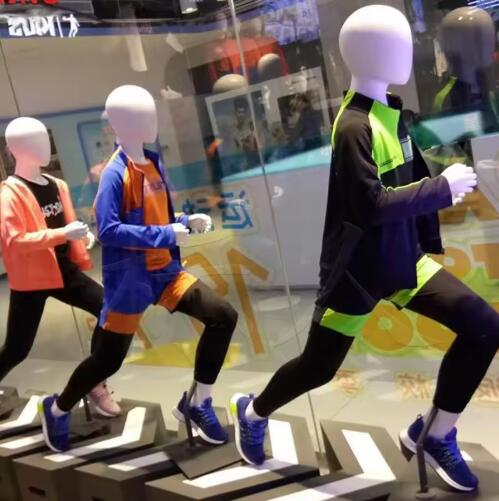
Child mannequins
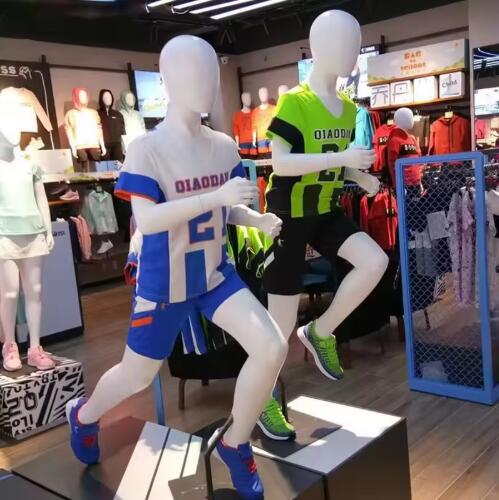
Female mannequin
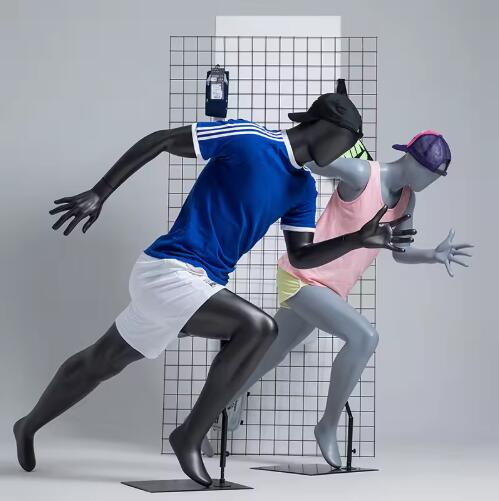
sports mannequin