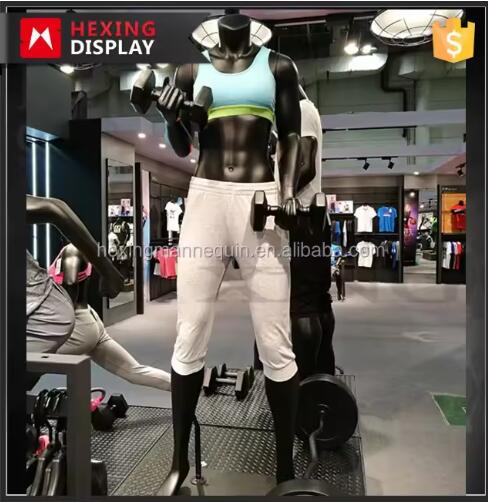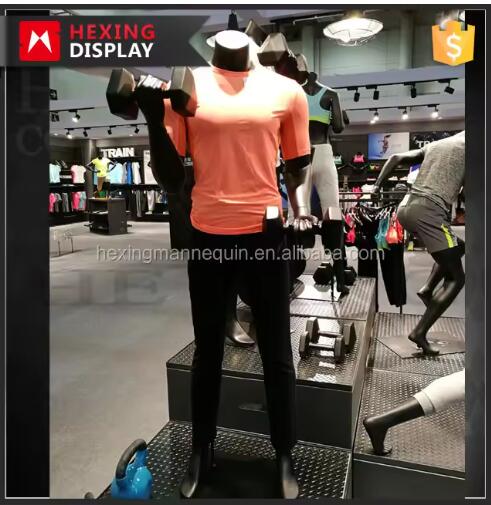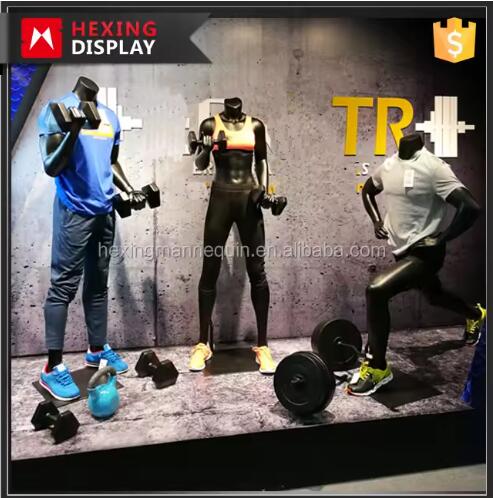

In the precision-driven visual merchandising of today, the lower body display has emerged as a critical, yet often overlooked, conversion engine. The evolution from a static trouser stand to a dynamic Male mannequin hip form exemplifies a deeper understanding of biomechanics, consumer psychology, and brand storytelling. This specialized focus on the lower body is not an isolated trend; it reflects a holistic approach to display that equally informs the design of Female mannequin lines, the functionality of sports mannequins, the realism of athletic mannequin poses, and even the proportional accuracy of Child mannequins. The hip mannequin is where science meets sales.
The key innovation is the move from static to kinetic suggestion. A hip tilted at a precise 7-15 degree angle does more than hold trousers; it tells a story of movement and fit.
For Performance & Sport: Sports mannequins and athletic mannequin displays utilize this principle masterfully. A tilted hip and engaged gluteal form visually demonstrate the muscle-hugging support of compression wear or the freedom of motion in training shorts, translating technical features into immediate, understandable benefits.
For Versatility & Street Style: Modular hip designs with adjustable stance widths allow a single Male mannequin or Female mannequin form to authentically display both relaxed-fit streetwear and tailored trousers. This agility is vital for fast-changing inventories and diverse brand collections.
The Science of the Gaze: Ergonomic Optimization
Advanced design is now data-informed. Understanding that the average sightline to a lower-body display is a 30-degree downward angle has led to intelligent adjustments.
The Golden Height: Simply lowering the display height of a hip mannequin from a standard 107cm to a more natural 98cm can dramatically increase engagement, as proven by a 41% rise in fitting room usage. This creates a more intuitive and less intimidating visual dialogue with the garment.
Adaptive Technology: The future points to responsive forms. Imagine an athletic mannequin hip that subtly adjusts its pose via micro-motors to maintain the optimal viewing angle as a customer moves, or that mimics a real walking gait to show how fabric moves with the body.
Material Innovation and Sustainable Narrative
The substance of the mannequin itself is becoming part of the brand story, a trend that spans all categories.
The Living Material: Eco-conscious brands are pioneering hip forms made from responsive materials like linen composites. These mannequins develop natural creases with humidity, perfectly showcasing the "breathability" of organic cotton trousers—a powerful, silent testament to sustainable values.
The Hybrid Display: Avant-garde concepts use "fractured" or minimalist hip forms combined with holographic projection. This allows a single physical Female mannequin or Male mannequin base to digitally showcase an entire range of bottoms in various virtual environments, blending physical presence with infinite digital possibility.
A Holistic Approach: From Adults to Children
The principles honed on adult hip mannequins are directly applicable to younger demographics. Designing accurate, proportioned Child mannequins with a natural, playful stance is equally important for showcasing kids' activewear or denim, ensuring the display resonates with both parent and child.
The modern hip mannequin is far more than a pair of legs. It is a biomechanically-engineered tool, an ergonomically-optimized interface, and a sustainable material statement. By investing in intelligently designed lower body forms—whether for a rugged Male mannequin in a workwear shop, a sleek Female mannequin in a boutique, or dynamic sports mannequins in a stadium store—brands tap into a deeper level of consumer communication. It's a strategic recognition that in the journey to conversion, every angle, every curve, and every suggestion of movement counts.